Tron: Identity is the perfect Disney universe for Bithell Games to play around in
A surprising culmination of everything the studio has been building towards since Thomas Was Alone.


^Watch our Tron: Identity video review above!
TRON is one of the most historically significant films in Disney’s catalogue. Perhaps more than any other movie, it was massively ahead of its time: the techniques and technology developed in order to shoot it have in the many decades since its production become the norm for big-budget filmmaking. It had a huge big-budget sequel, an animated spin-off series, and a litany of video game adaptations (including the marvellous TRON 2.0, which still works as a worthy sequel to the original film). So why has this major franchise that hasn’t produced anything since the early 2010s come back with, of all things, a visual novel?
See, TRON is an odd one. The original film, which I love, is as silly as it is pivotal. The liberal use of computer-generated imagery, which looks proterozoic by today’s standards but oddly timeless as a result, combined with the process of shooting most of the film against nothing in order to transplant the actors into a world conjured out of CG and matte paintings – a film where almost every shot is a visual effect – was pretty much unheard of at the time.

Nothing before or since has looked quite like TRON, not even its own sequel.
Now, it’s how the vast majority of Big Screen Extravaganzas are shot. The Star Wars prequels infamously ushered in the de facto workflow for digital filmmaking, where the vast majority of the creative work is done in post, and actors doing acting are merely another plate in the compositor’s inbox. But it was Tron, in 1982, that first signalled where things were headed.
It’s a truly landmark film in terms of the craft of filmmaking. But time hasn’t been kind to TRON. It’s a hard thing to love because, let’s face it, it’s goofy as hell. They’ve got the late David Warner moping about in glowing spandex, for christ’s sake. They’ve got Jeff Bridges, the Prince Regent of Cool, looking like an absolute dork next to Bruce Boxleitner, who is mostly well known for being the commander on Babylon 5 (the least cool thing ever produced, and I say that as someone who loves it enough to have bought the 4K remaster on digital).

David Warner in TRON, probably thinking about how he used to play King Lear.
The 2010 sequel, Tron: Legacy, did a lot of file off Tron’s dafter edges, re-envisioning The Grid as slick, cool, moodily-lit cyberpunk cityscape: a new kind of Tron where everyone gets their trousers at Cyberdog. But most people thought it was a bit naff, and ultimately its only real cultural impact was that the Daft Punk soundtrack was Quite Good and they used it in Top Gear quite a lot afterwards.
So TRON is a hugely important, historically significant, and very well known property with a massive fanbase. But every time it’s emerged, it has subsequently flopped. So it makes perfect sense, then, to bring it back in a form that doesn’t take hundreds of millions of dollars to produce. To allow the audience to dip their toes back into the energy pool without committing to so much as a single Jeff Bridges breakfast order. Enter Tron: Identity, a game which in true Bithell Games style does one hell of a lot with very little.
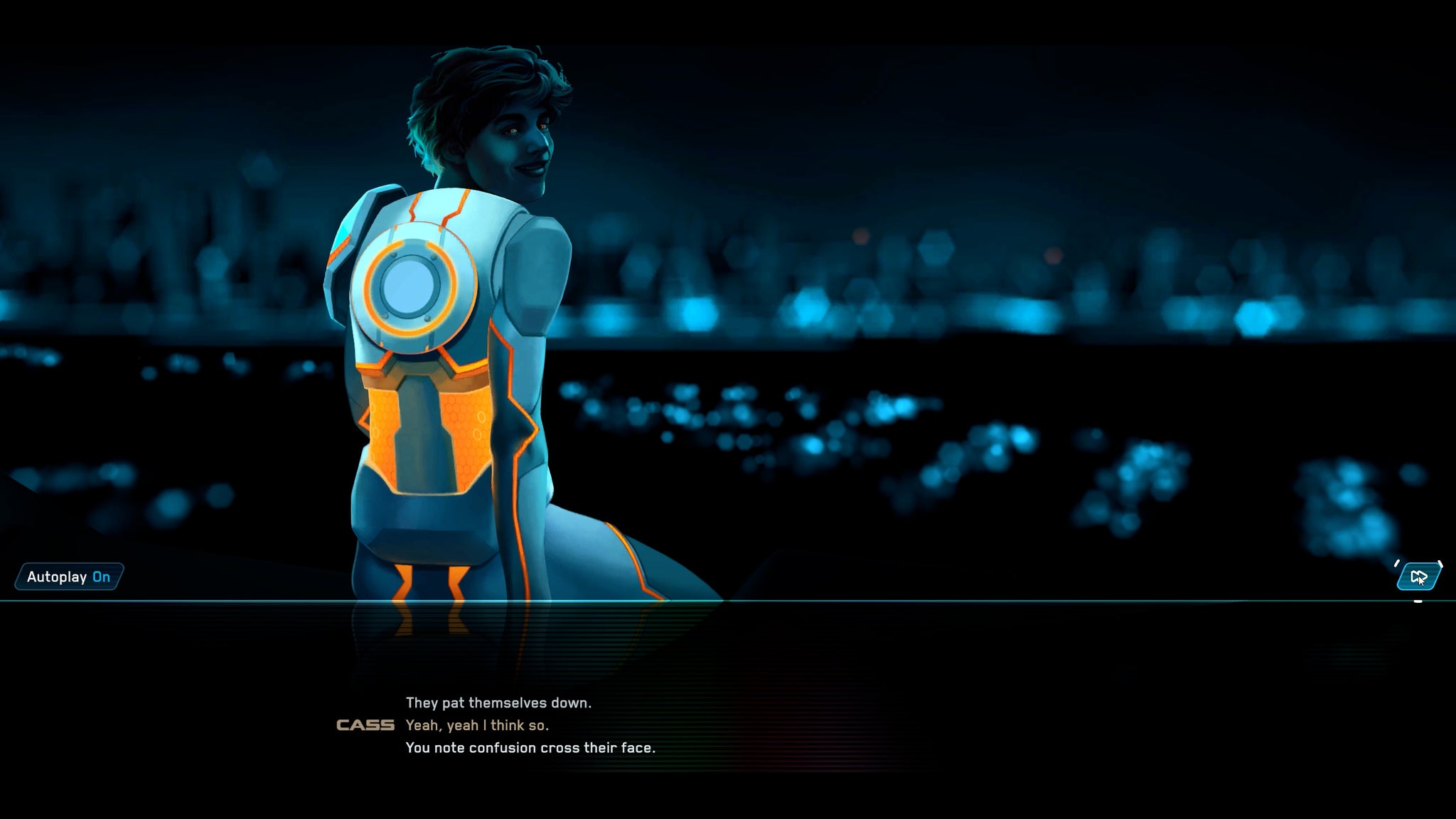
Tron: Identity is a striking visual novel.
This is one of the most perfect pairings of game studio and IP that there has possibly ever been. In stark contrast to, say, John Wick Hex , which a lot of people felt just wasn’t the spectacular, triple-A treatment that John Wick deserves. Bithell Games emerged onto the scene with Thomas Was Alone, an endearing story about several four-sided shapes of different lengths and widths, which were actually representations of rogue AIs which had achieved sentience and were helping each other navigate the guts of a vast computer system.
I mean, that’s a TRON game in all but name. I’m almost kicking myself that I didn’t see it before. But the rest of Bithell’s catalogue reads almost like a mood board of Tron pitch ideas. Consider Volume, the Metal Gear Solid -lite, neo-Robin Hood extravaganza that, after Thomas put Bithell on the map, ensured that he would stay. Its art style is, and one again I’m kicking myself for not clocking this at the time, pure TRON. The spandex, the glowy bits, the flat, gouraud-shaded surfaces. Slap a couple of futuristic motorbikes in there and Disney might have had grounds for legal action.

This is Volume, but if you’d told me it was a screengrab from Tron 3 I might have believed you.

Subsurface Circular was a quite the page-turner.
Finally, The Solitaire Conspiracy, with which Bithell Games attempted to revamp the classic card game for bored contact centre workers into something slick and stylish that could carry an FMV narrative, with power-ups that added a tactical element to those strategies that everyone had spent their entire lives honing while their boss wasn’t looking. Solitaire makes its way into Tron: Identity, very warped but nonetheless recognisable, as a defragmentation mini-game which serves as your only interaction with the game world beyond conversation. With it, you can uncover memories from NPCs, whose data streams have been disrupted by a mysterious explosion in The Grid’s repository building.
Tron: Identity is short, and set entirely within one location, but it contains a multitude of complex ideas, and touches on many of the more metaphysical aspects of TRON: are the users gods? Do they even exist? If they don’t exist, who wrote us? And so on. It starts, like Subsurface Circular, ostensibly as a detective story, but grows into something much larger, with profound consequences for the wider world. As the first step into a new era for TRON, it works beautifully and leaves you wanting more.
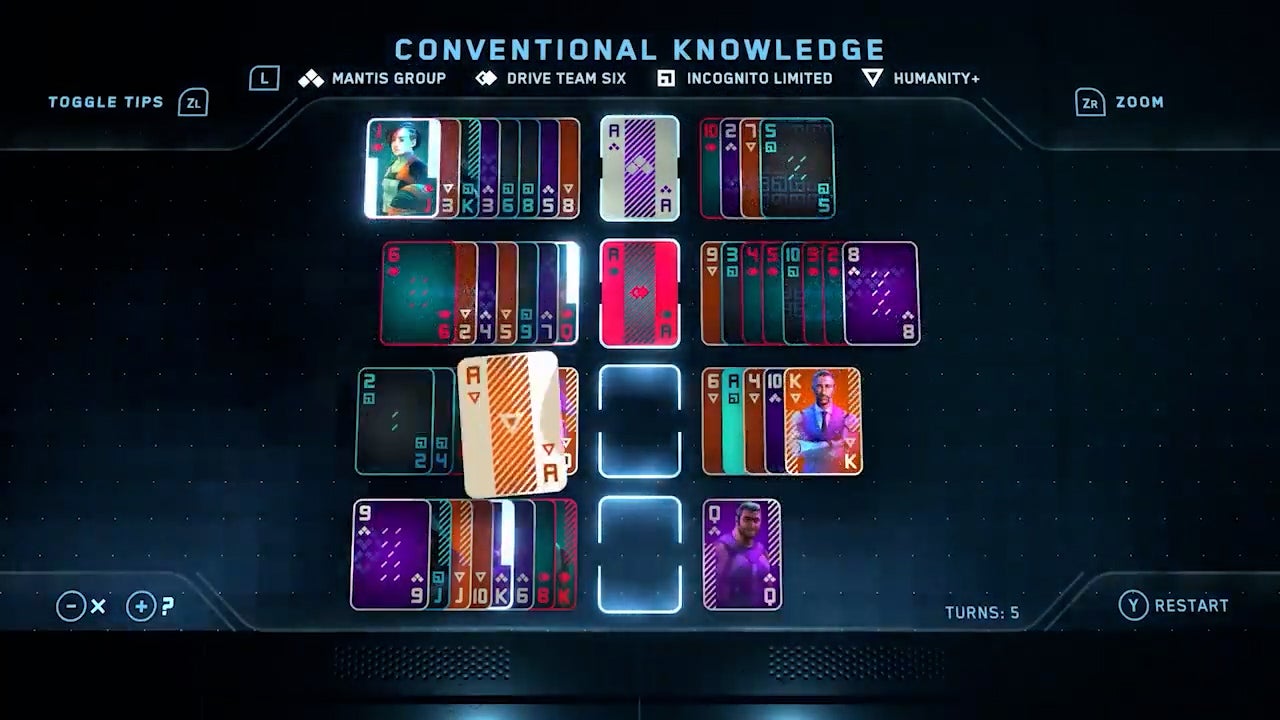
Who knew that Solitaire would become pivotal to a TRON revival?
However it turns out, one thing is clear: Bithell Games can build big, world-shattering stories with the humblest of humble toolsets. Spielberg once explained that Laurence of Arabia is his favourite film because it uses nothing but captured light and sound – the most basic mediums available to a filmmaker – to tell one of the grandest stories ever told. Tron: Identity strives toward a similar ambition with a similarly fundamental toolset: scripting, interactivity, and art. I hope the story continues.

TRON 2.0
Nintendo GBA , PC
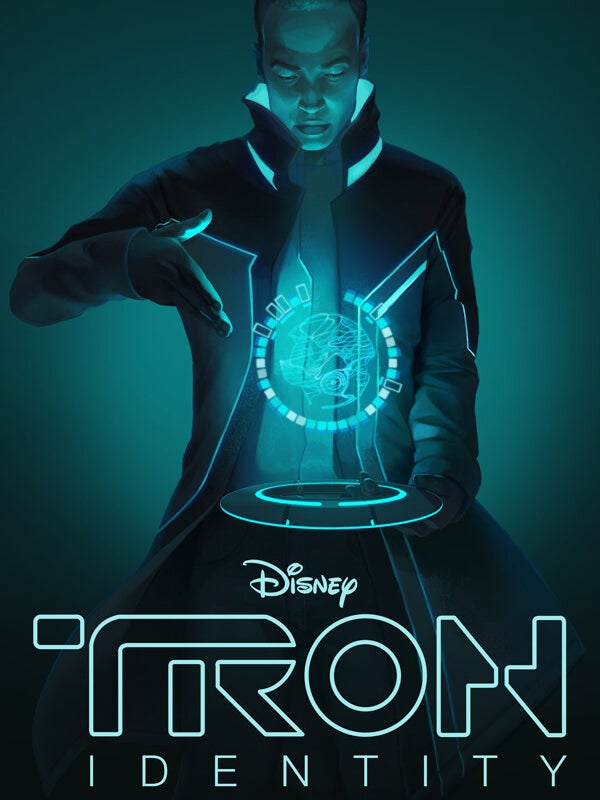
Tron: Identity
Video Game
Sign in and unlock a world of features

Wishlisted - Our 10 Best Steam Next Fest Demos
Another Next Fest kicks off soon, but we’ve already done the digging for you.
Welcome to Wishlisted, a showcase of our favourite demos from Steam Next Fest: June 2024. Check the video above or watch on YouTube .
Finding the Best NextFest Demos is all about the joy of discovery, but with so many Steam Next Fest demos getting released in such a short amount of time, it can be bewildering. So we’ve decided to show you our ten Best Steam Next Fest games which we think deserve your attention. These are all upcoming Steam Next Fest games that we’re genuinely excited for, and that we think should play nicely on PC handhelds too!
This is just the start of our Next Fest coverage. This week we’ll be previewing loads of upcoming demos across the entire network - right here on VG247, of course, but also over on our sister sites Eurogamer and Rock Paper Shotgun. Bookmark our Wishlisted Steam Fest hub to stay in the loop. And this is well before Next Fest actually starts, so you, dear reader, get to bask for a solid fortnight celebrating all the wonderful new games that are just around the corner. Enjoy!
Dungeons & Degenerate Gamblers
Video Game

Gourdlets
Video Game
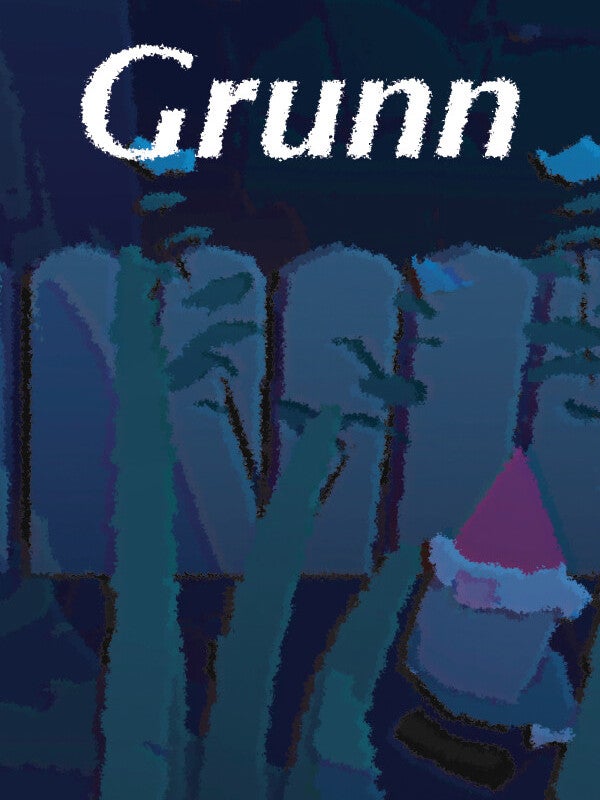
Grunn
Video Game

Love Ghostie
PC

Odinfall
PC

Parking Garage Rally Circuit
PC
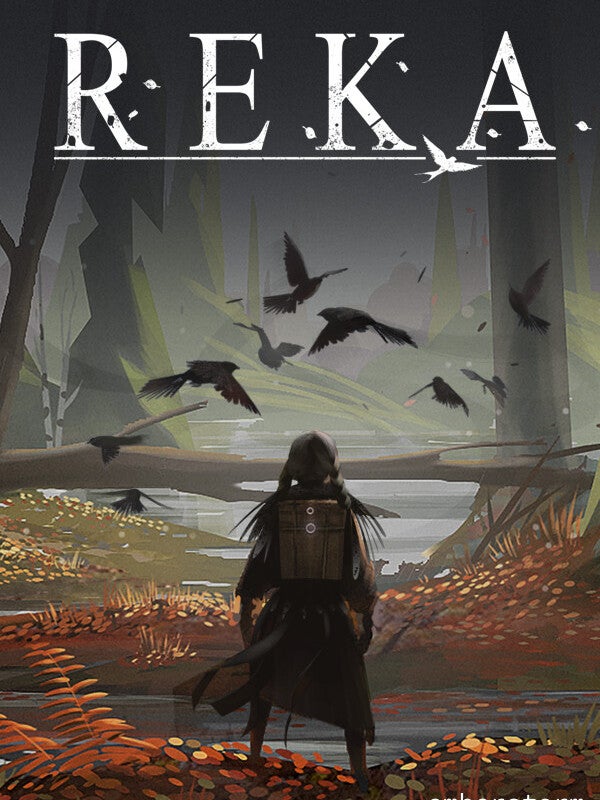
Reka
PC
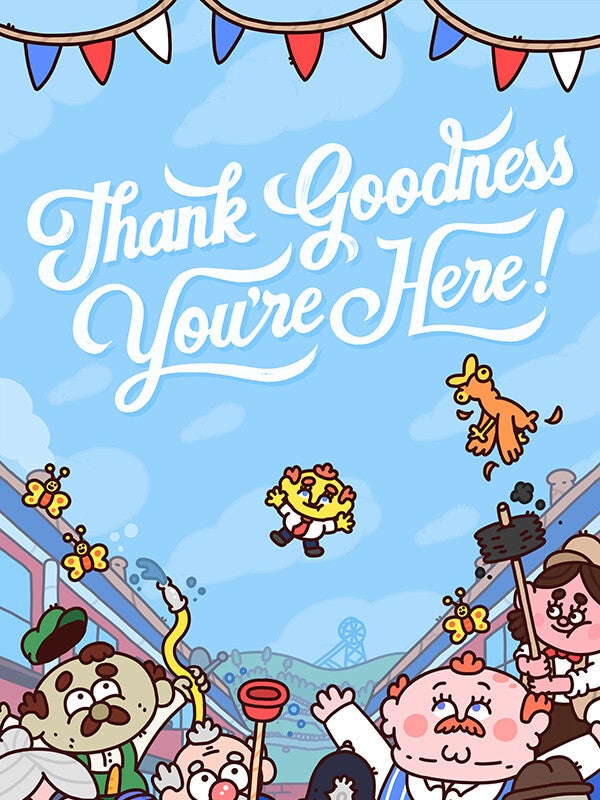
Thank Goodness You’re Here!
Video Game
_8mq2fx2.jpg?width=2048&height=2048&fit=bounds&quality=85&format=jpg&auto=webp)
Tormenture
PC
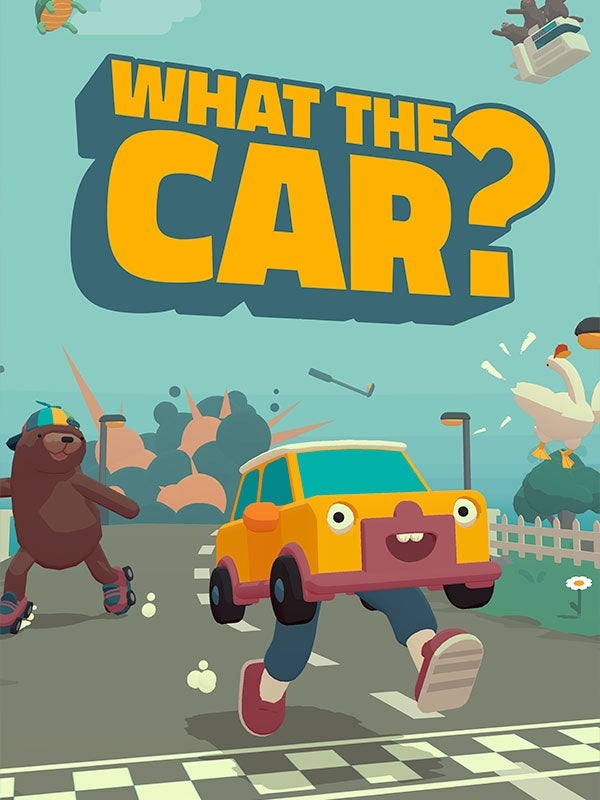
WHAT THE CAR?
iOS , PC , Mac
Sign in and unlock a world of features
